
HOLO
A calm, privacy-first AI presence for phone, desktop, and eventually AR glasses. Not a chat box - a visible avatar, voice interface, and user-controlled memory designed around presence and calm usefulness, not engagement.
The Idea
Most AI assistants today are one of four things: a chatbot in a text box, a voice assistant with no real presence, a productivity tool with AI bolted on, or an AR demo that looks futuristic but isn't useful day to day. None of them feel like a presence you can actually live alongside.
HOLO combines those ideas into one focused product - a privacy-first AI presence you can talk to, see, configure, and eventually bring into your physical space through AR glasses. It is designed around calm usefulness, not constant interruption.
The Approach
HOLO is built around presence, not just conversation. A soft, non-photorealistic avatar shows clear states - dormant, listening, thinking, speaking - so you always know what it is doing. It stays calm by default: it knows when to speak and when to stay silent. Rather than chasing AR hardware first, HOLO starts as a strong software MVP on phone and web and grows toward a glasses simulator and real AR later.
See It In Action
A real screen recording from the early-stage build. Demo data only - no real user accounts shown.
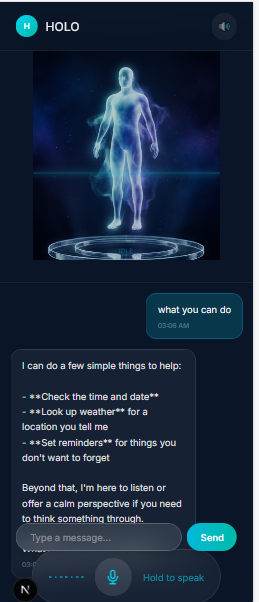 In build
HOLO's presence avatar, voice input, and calm chat running on mobile.
What JTech Is Building
The Phase 1 software MVP - a working AI presence layer on phone and web:
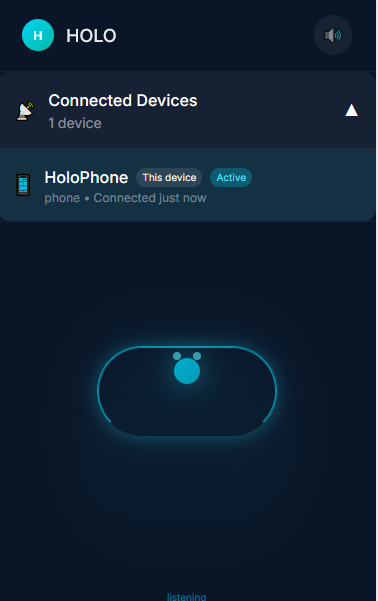
- Presence avatar - a soft visual avatar with idle, listening, thinking, and speaking states.
- Voice interface - push-to-talk input with a clear microphone indicator, plus spoken responses.
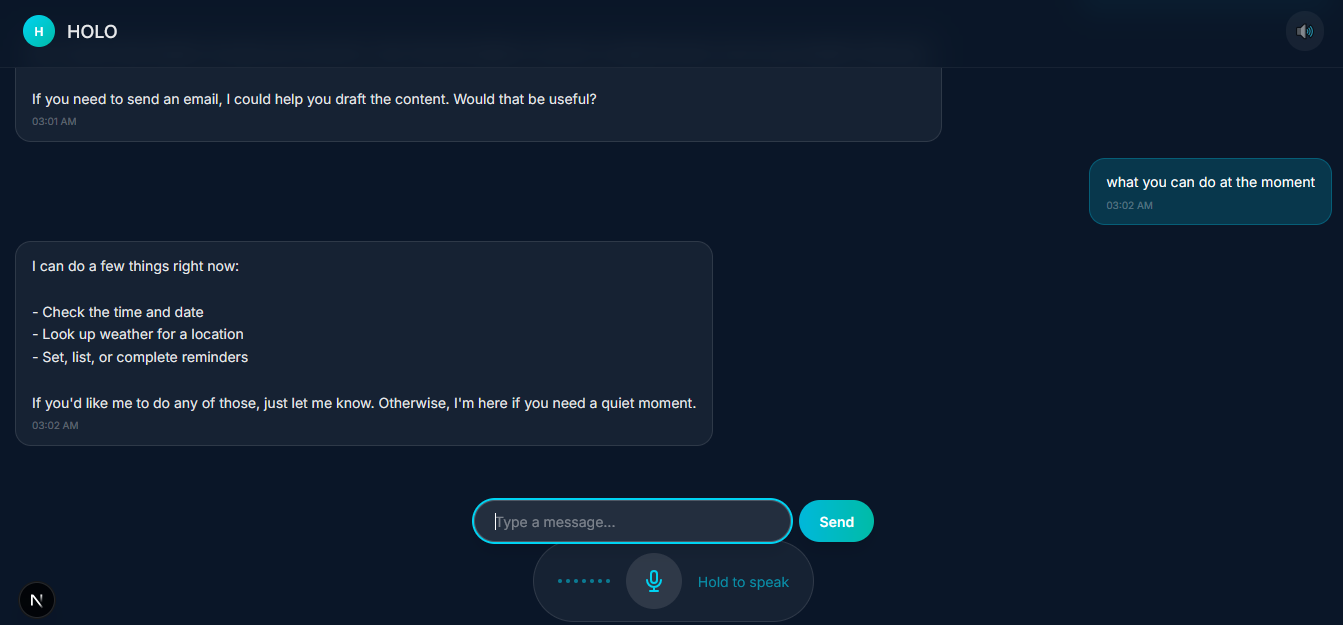
- Calm chat - reliable text interaction that knows when to keep answers brief.
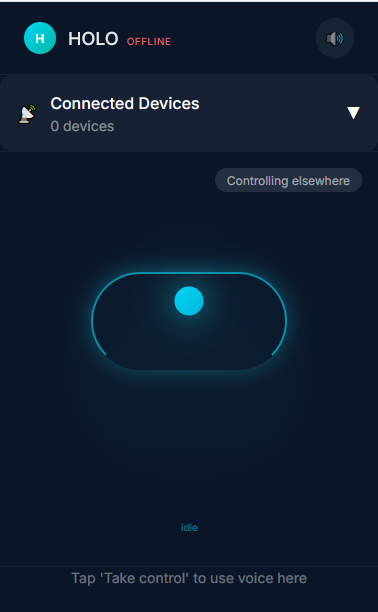
- Multi-device sync - a connected-devices panel so HOLO can move between phone and desktop.
- Controllable memory - memory you can view, edit, and delete, with privacy settings up front.
Inside the Product
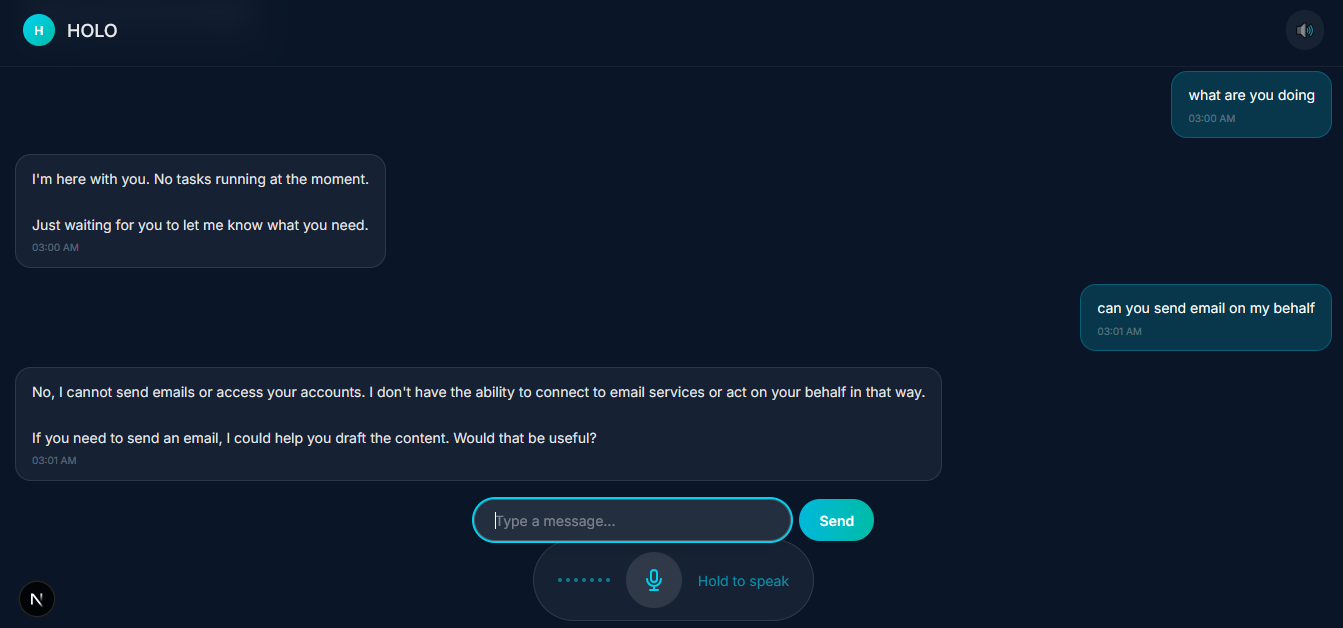
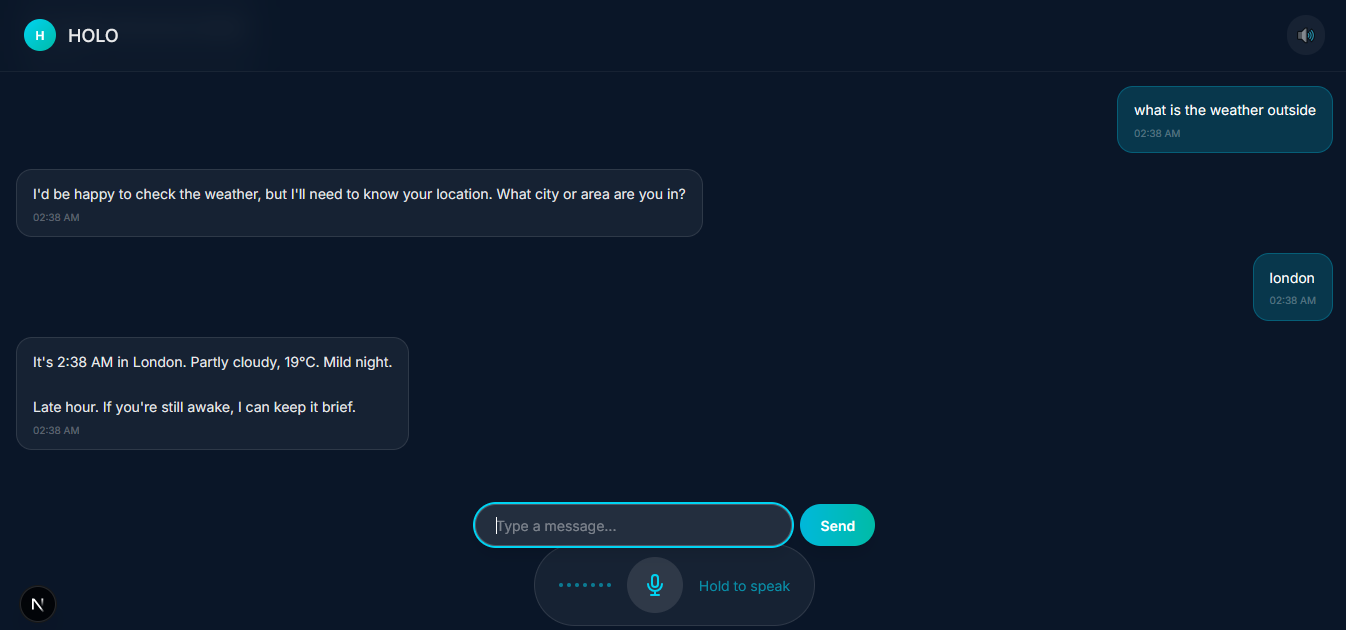
Screens from the early-stage build. All content uses demo accounts and seed data.
Product Modes
Chat Mode
Reliable text assistant for research, writing, and structured answers - the MVP foundation.
Voice Mode
Calm, hands-free conversation with push-to-talk and visible microphone state.
Avatar Mode
A soft, non-photorealistic presence with subtle states - trustworthy, not uncanny.
Glasses Simulator
A future phone-based AR simulation to test spatial interaction before real glasses.
Technical Architecture
Frontend
Next.js and React with a dark, premium UI, a soft holographic avatar layer, and voice input - designed mobile-first.
Backend & Auth
Firebase Auth and Firestore for accounts, conversations, and memory, with Cloud Run reserved for heavier AI routing.
AI Runtime
A model-routing layer that picks the right model per task and budget, plus speech-to-text and text-to-speech for voice.
Roadmap
Phase 1: Software MVP (now)
Login, chat, voice input/output, avatar presence, personality and privacy settings, and basic memory.
Phase 2: Assistant Runtime
Better AI routing, conversation history, memory management, reminders, notes, and task tools.
Phase 3+: Glasses & AR
A phone-based glasses simulator, then OpenXR / Unity prototypes for real AR glasses with a world-locked avatar.
Privacy Philosophy
For a persistent AI presence, privacy is a core feature, not a footnote:
Quick Facts
| Status | Early Stage / In Development |
| Category | AI Presence Platform |
| Stack | Next.js · Firebase · Cloud Run · STT/TTS |
| Platforms | Phone, Web, future AR glasses |
| Focus | Presence, Voice, Privacy, Memory |
What Makes HOLO Different
- Presence-first design, not just another chat window.
- Calm interaction model - it knows when not to respond.
- Privacy-first, user-controlled memory.
- Built as software first, designed for an AR future.
Related Services
Want to build something similar?
Tell JTech what you want to build, who it is for, and what problem it needs to solve. We will help turn your idea into a practical, secure software blueprint.